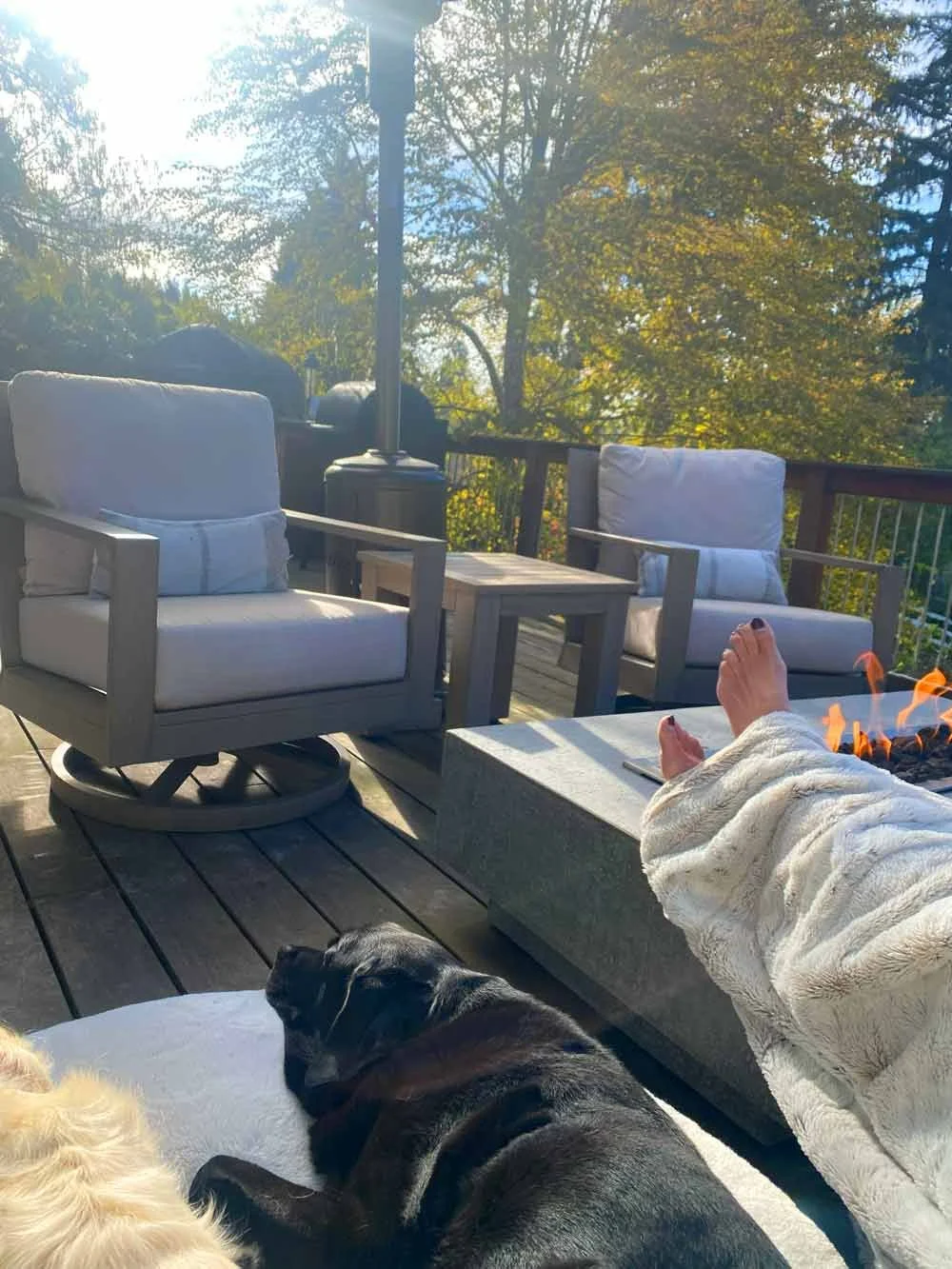
Early mornings are sacred to me. On warm Pacific Northwest summer mornings, my porch becomes a quiet place for prayer and reflection. Mountain view, fire pit lit, hot coffee, heated blanket, and my Labrador curled on my lap, convinced she weighs about ten pounds (I beg to differ). I settle in with Scripture and a devotional app, and a conversation begins. A prayerful time to process and to listen.
During one of those quiet morning “retreats”, the idea for a Mini Mental Health Retreat came to me. “A resource,” I thought. “A simple yet profound place for people to find some answers in bite-sized insights. Not too much. Not too little.”
My heart beat a little faster. My fingers started writing, and before long a rough draft sat in front of me. It felt special. It felt like it could reach far beyond my porch.
Why Create a Mental Health Retreat People Can Do on Their Own?
A couple of months earlier, my friend Kristi at Rinehart Marketing, who built our Mirador Retreats website, shared something interesting. She had noticed the searches bringing people to us: mental health, retreats, and mental health retreats. People were looking, and I wondered if that might be a helpful discovery.
I’m a licensed marriage and family therapist, and I’ve spent more than 30 years walking alongside people through their thoughts, beliefs, pains, and questions. From teenagers to those in their later years, I’ve journeyed with them as they sought greater individual, marital, family, relational, mental, and spiritual well-being. It has been an honor and privilege to join these courageous people in so many seasons. I have each and every one of them to thank for more than I could ever put into words.
How Are People Exploring Their Mental Health Today?
More and more, people begin that exploration privately and digitally, in spaces where they already feel comfortable. Recent research shows it:
About 3 in 10 U.S. adults, and nearly half of those ages 18 to 44, have used a self-guided digital tool for mental health or well-being. (Bipartisan Policy Center)
Nearly 70% of users say digital tools feel more comfortable than speaking with someone directly, and about half cite affordability as a key reason. (Bipartisan Policy Center)
About 1 in 6 adults (16%), including 3 in 10 adults under 30 (28%), used AI tools for mental health information or advice in the past year. (KFF Health Tracking Polls)
34% of teens say they get mental health information on social media; 63% of this group says it is an important source (Pew Research Center)
I read those numbers as a simple message: people want a place to begin. They want insight, support, and understanding, and many are quietly asking, “Why do I do the things I do?”
What Is the Mini Mental Health Retreat?
The Mini Mental Health Retreat is a self-guided, seven-section workbook I wrote to meet people at that starting point. You can open it today, in your own comfortable, retreat-like space. It offers a place for reflection and growing self-awareness. It also encourages you to connect with trusted people and to consider whether more support or professional care might help.
Where Can You Take a Mental Health Retreat?
Maybe on a porch with a cup of coffee and a journal. In a dorm room, at a cabin, in a place of recovery, or on a quiet afternoon at home. Anywhere you can slow down long enough to get curious about what’s happening inside you.
A little more insight.
A little more hope.
A lot more truth.